
Water Hygiene Monitoring: What It Involves and Why It Matters
A Legionella risk assessment tells you where risk exists — but keeping a water system safe day to day depends on water hygiene monitoring. It is the ongoing set of checks that keep your system within safe limits and prove you are in control. This guide explains what monitoring involves, how often it should happen, and who is responsible.
What is water hygiene monitoring?
Water hygiene monitoring is the routine programme of checks that keeps a building’s water systems operating safely and demonstrates ongoing control of risks such as Legionella. Where a risk assessment is a point-in-time survey, monitoring is the continuous activity that follows — measuring, recording and acting on the conditions that allow bacteria to grow.
What does water hygiene monitoring involve?
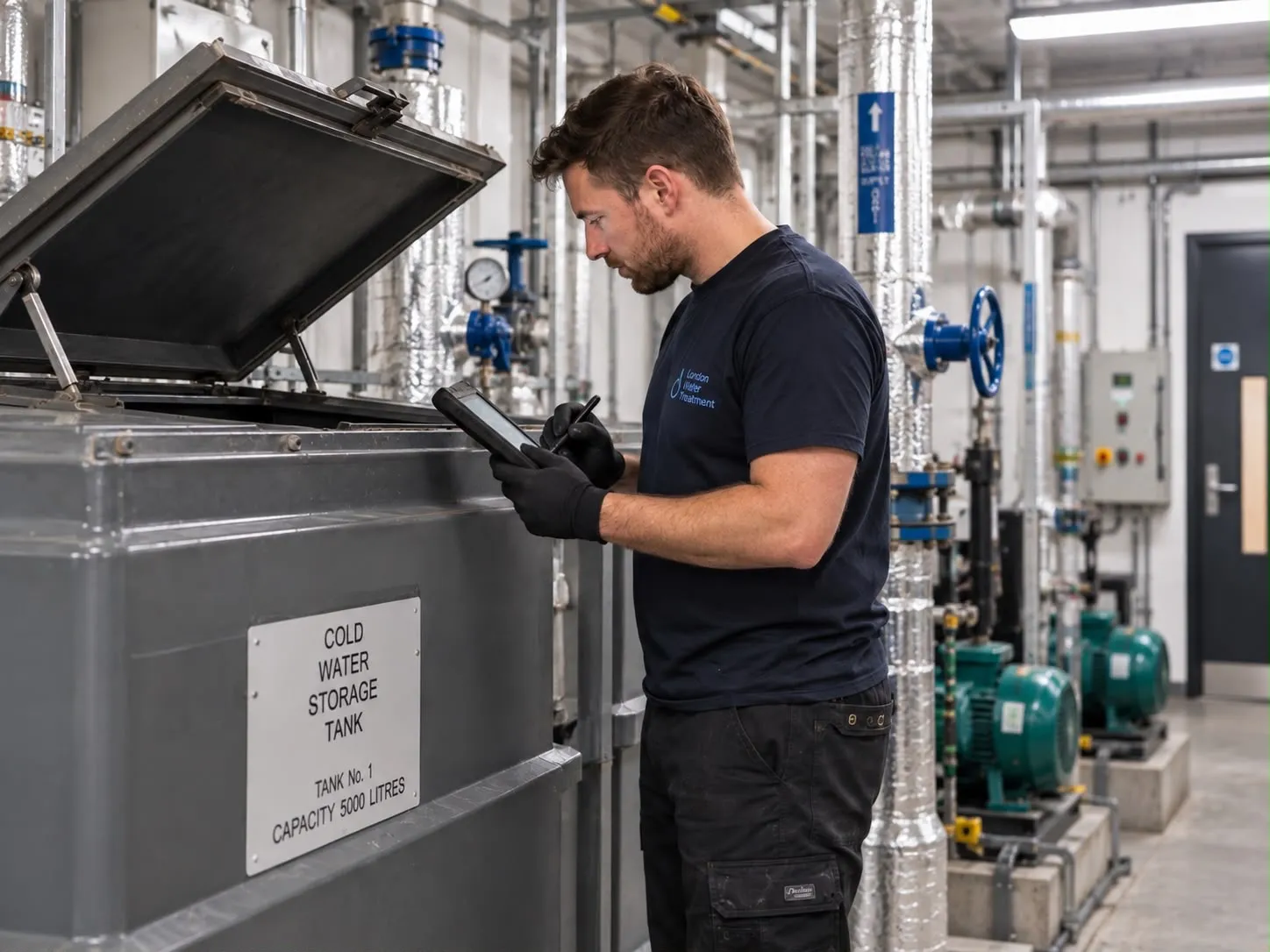
A typical monitoring programme brings together several recurring tasks:
- Temperature monitoring of hot and cold water at sentinel and representative outlets.
- Flushing of little-used outlets to prevent water stagnating.
- Tank and calorifier inspections to check condition and temperature.
- Showerhead and spray-outlet cleaning and descaling.
- Thermostatic mixing valve (TMV) checks where fitted.
- Water sampling where required — see our guide to Legionella testing.
- Record keeping — logging every check so you can prove compliance.
Why water hygiene monitoring matters
A risk assessment identifies risk; monitoring is how you actually control it. Under the HSE’s Approved Code of Practice L8 and guidance HSG274, duty holders must not only assess risk but keep it under control and maintain records that show they are doing so. Consistent monitoring catches problems — a failing thermostat, a dead leg, a warm cold-water tank — before they become a hazard, and provides the evidence trail you need at audit.
How often should monitoring be done?
Frequencies are set by your risk assessment, but common intervals include monthly temperature checks at sentinel outlets, weekly flushing of outlets that are rarely used, and annual tank inspections. Temperature is the primary control — see our guide to what temperature kills Legionella for the safe ranges to monitor against.
Who is responsible for water hygiene monitoring?
Legal responsibility sits with the duty holder — usually the employer, building owner, landlord or managing agent. Day-to-day tasks can be carried out in-house or delegated to a water hygiene contractor, but the responsibility for making sure monitoring happens, and happens properly, cannot be passed on.
Water hygiene monitoring in London
London Water Treatment provides Legionella control and full water hygiene services across London, including monitoring programmes, tank cleaning and sampling. Get in touch to set up or review your monitoring regime.
Frequently asked questions
What’s the difference between monitoring and a risk assessment?
A risk assessment is a periodic survey that identifies risks; monitoring is the ongoing programme of checks that keeps those risks controlled between assessments.
Can I do water hygiene monitoring in-house?
Some tasks can be done in-house if staff are trained and competent, but many organisations use a specialist to ensure checks are carried out correctly and records stand up to scrutiny. The duty holder remains responsible either way.